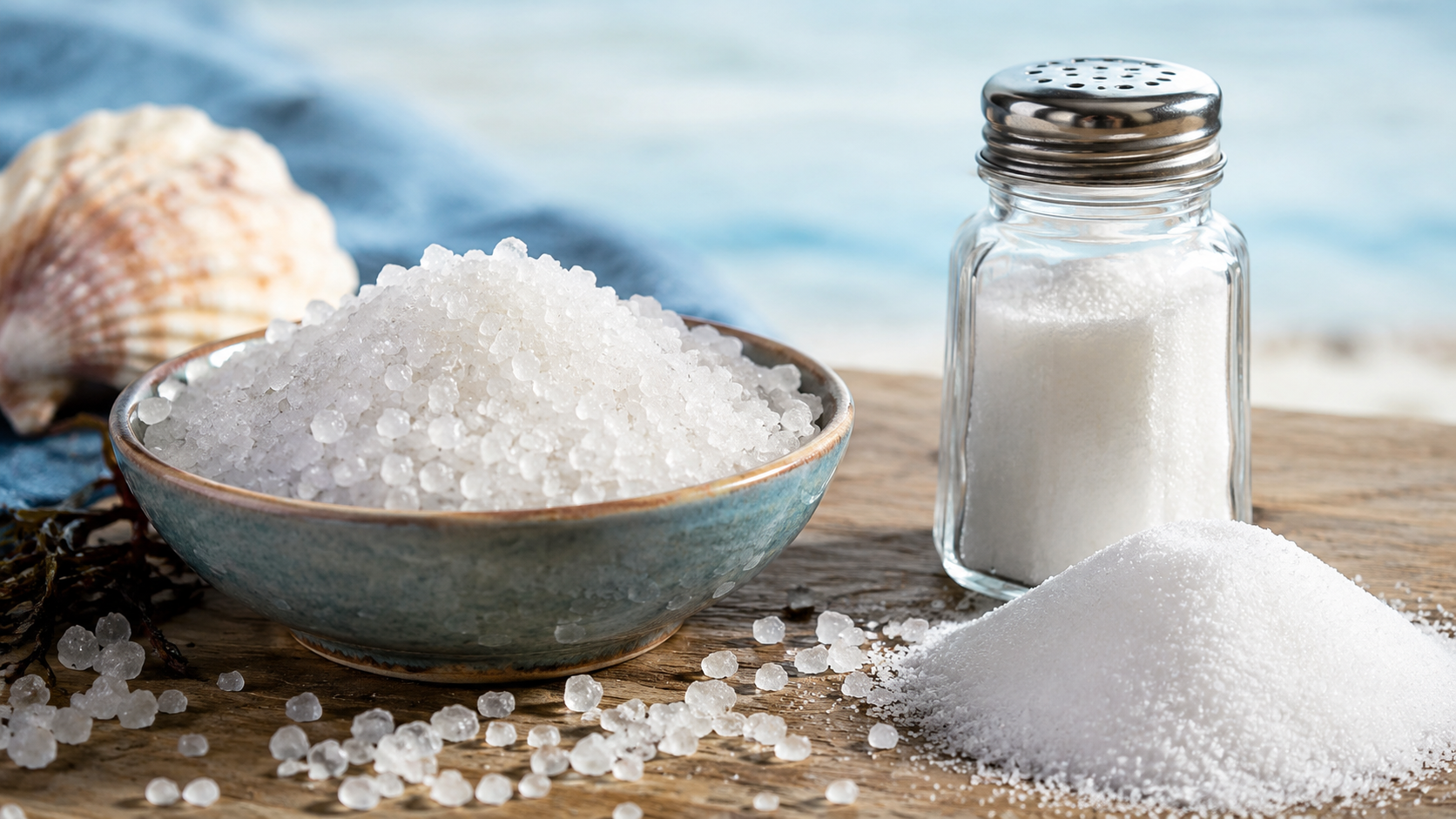
Sea salt is a type of salt produced by evaporating seawater. After the water evaporates, salt crystals remain and are collected, dried, and packaged for culinary use. Depending on its source and production method, sea salt may have fine, coarse, flaky, or irregular crystals.
Regular salt, also known as table salt, usually comes from underground salt deposits. It is processed and refined to remove impurities and create small, uniform crystals. Some table salts also contain anti-caking agents that prevent the crystals from sticking together.
Sea Salt vs. Regular Salt
The most noticeable difference between sea salt and regular salt is their texture. Sea salt often has larger crystals and a stronger crunch, making it popular as a finishing salt for salads, grilled foods, bread, and other dishes.
Sea salt may also contain trace amounts of minerals such as magnesium, calcium, and potassium. However, these minerals are generally present in quantities too small to provide major nutritional benefits.
Nutritionally, sea salt and table salt contain comparable amounts of sodium by weight. Therefore, sea salt should not automatically be considered a low-sodium or healthier alternative to regular salt.
Another important difference is iodine. Many regular table salts are fortified with iodine, an essential nutrient required for normal thyroid function. Most specialty salts, including many sea salts, contain little or no iodine unless the packaging specifically says “iodized.”
Is Sea Salt Healthier?
Sea salt can be a good culinary choice because of its flavor and texture, but it is not significantly healthier than table salt. The most important factor is the total amount of sodium consumed.
The World Health Organization recommends that adults consume less than 5 grams of salt per day, which is equal to less than 2,000 milligrams of sodium.
Conclusion
The choice between sea salt and regular salt mainly depends on taste, texture, and cooking needs. Sea salt works well as a finishing ingredient, while iodized table salt can help provide iodine. Whichever type you choose, use it in moderation as part of a balanced diet.