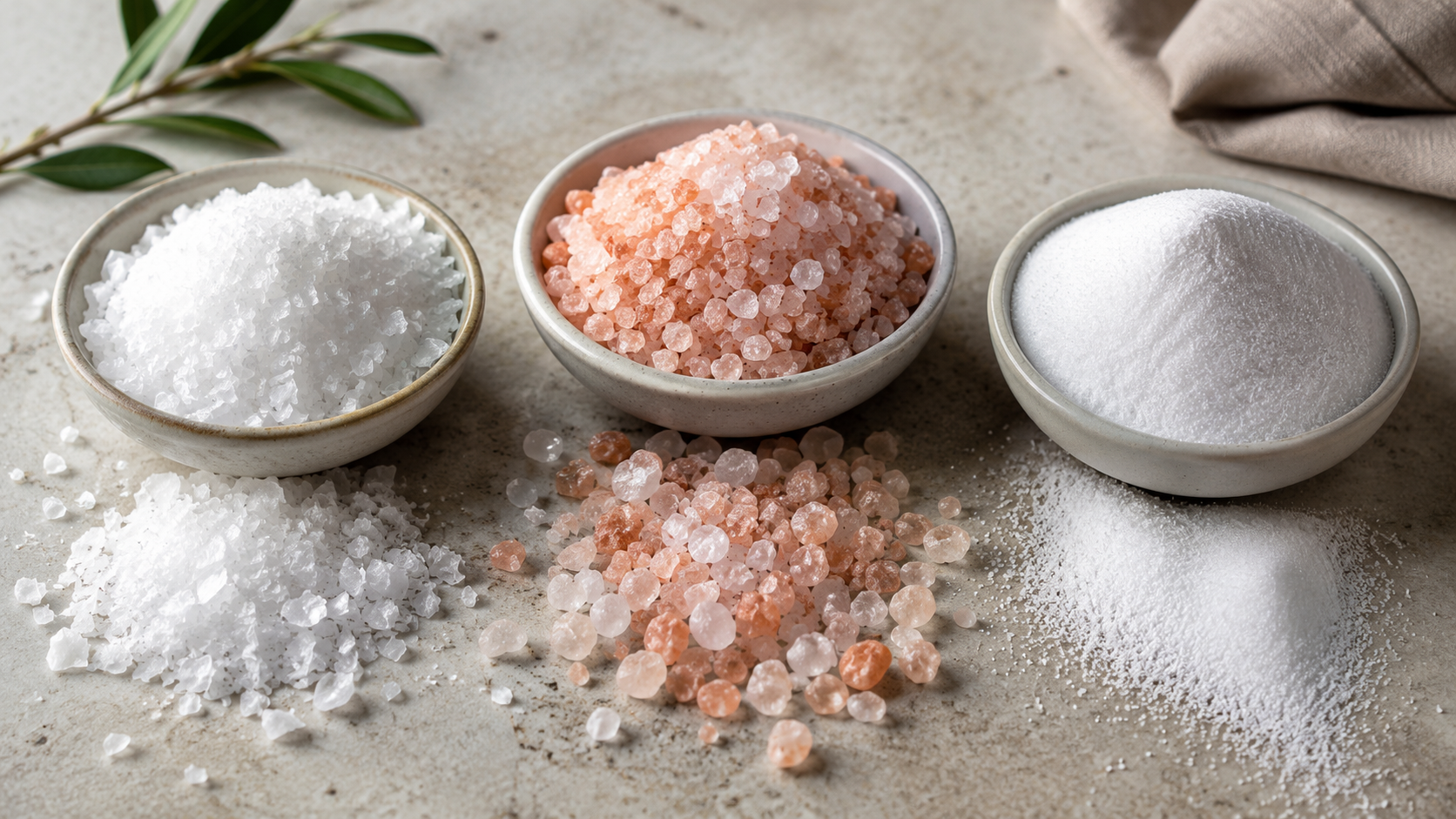
Sea salt, rock salt, and refined salt are all mainly composed of sodium chloride. However, they differ in their source, processing method, texture, appearance, and iodine content.
Understanding these differences can help you select the most suitable salt for cooking and daily consumption.
What Is Sea Salt?
Sea salt is produced through the evaporation of seawater. It is available in different crystal sizes and may retain small amounts of naturally occurring minerals.
Because of its coarse or flaky texture, sea salt is commonly used as a finishing salt. It can be sprinkled over salads, roasted vegetables, grilled meat, bread, and desserts.
Despite its natural image, sea salt contains a similar amount of sodium to regular table salt when compared by weight.
What Is Rock Salt?
Rock salt is extracted from underground salt deposits formed by ancient bodies of saltwater. It is usually sold as large, coarse crystals and may appear white, pink, gray, or another color depending on its mineral composition.
Some varieties, such as Himalayan pink salt, are marketed for their trace minerals. However, the amounts of these minerals are usually too small to make rock salt a major source of nutrients.
Only food-grade rock salt should be used in cooking. Salt intended for industrial use, ice removal, or decorative purposes may not be suitable for consumption.
What Is Refined Salt?
Refined salt is processed to remove impurities and create fine, evenly sized crystals. It dissolves quickly and is convenient for cooking, baking, seasoning, and food manufacturing.
Refined table salt may also contain anti-caking agents. Many products are fortified with iodine, although consumers should always check the label instead of assuming that every refined salt is iodized.
Iodized salt is an important dietary source of iodine, while many sea salts and specialty rock salts contain little or no iodine.
Quick Comparison
Sea salt is obtained from seawater and is valued for its texture and flavor.
Rock salt is mined from underground deposits and often has large, naturally colored crystals.
Refined salt is purified, fine-grained, and may be fortified with iodine.
Which One Is Better?
No type of regular salt should be consumed without limits. All three varieties can contribute significant sodium to the diet.
For everyday use, a food-grade iodized salt may be the most practical option, particularly for people who do not regularly consume other iodine-rich foods. Sea salt and rock salt can still be used for their texture and flavor, provided total salt intake remains moderate.
Conclusion
The main differences between sea salt, rock salt, and refined salt relate to origin, processing, texture, and iodine content—not major differences in sodium. Choose a safe, food-grade product and focus more on how much salt you consume than on premium marketing claims.