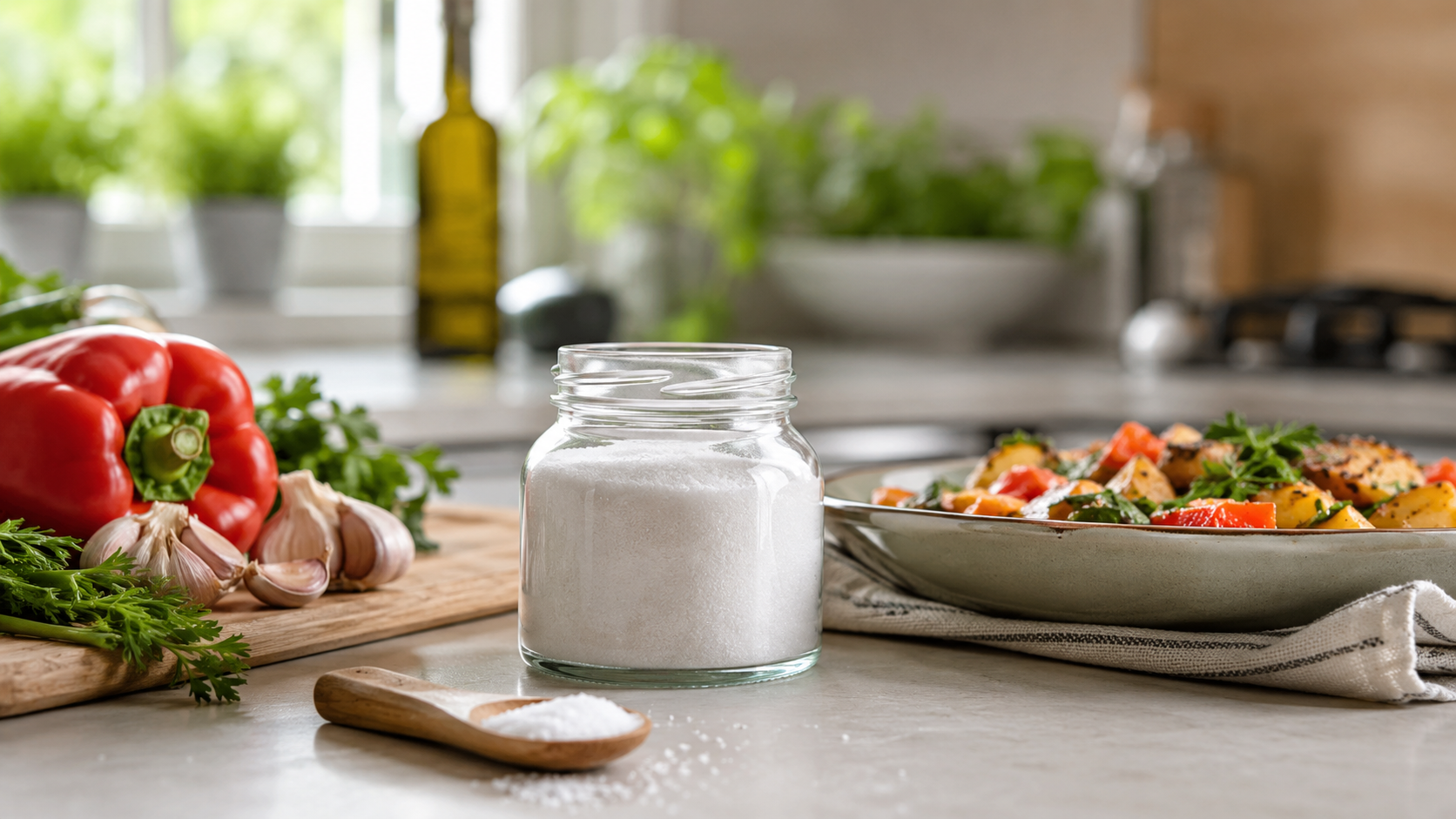
With so many products available—including sea salt, Himalayan salt, rock salt, refined salt, and low-sodium salt—it can be difficult to know which salt is best for everyday cooking.
For most people, the best option is a food-grade iodized salt used in small amounts. However, personal dietary needs and total sodium intake are more important than the color, price, or origin of the salt.
Why Is Iodized Salt a Practical Choice?
Iodine is an essential nutrient that the body needs to produce thyroid hormones. These hormones support metabolism, growth, and normal development.
Iodized salt is one of the most accessible dietary sources of iodine. In contrast, specialty salts such as sea salt, kosher salt, Himalayan salt, and many types of rock salt usually contain little or no iodine unless they are specifically fortified.
Therefore, when purchasing salt for daily use, look for the word “iodized” on the packaging.
Is Sea Salt Better for Everyday Use?
Sea salt is suitable for cooking and finishing dishes, but it is not automatically healthier than refined salt. Both sea salt and table salt contain comparable amounts of sodium by weight.
The trace minerals found in sea salt or colored rock salt are generally present in very small amounts. These salts should be selected for flavor, texture, and culinary preference rather than for major health benefits.
How Much Salt Should You Consume?
The quantity of salt is more important than the variety. The World Health Organization recommends consuming less than 5 grams of salt per day for adults, equivalent to less than 2,000 milligrams of sodium.
Remember that sodium does not come only from the salt shaker. Bread, cheese, processed meat, sauces, packaged snacks, canned foods, and restaurant meals can also contain large amounts of sodium.
What About Low-Sodium Salt?
Some salt substitutes replace part of the sodium with potassium. These products may help certain people reduce sodium intake, but they are not suitable for everyone. People with kidney conditions, elevated potassium levels, or those taking certain medications should consult a healthcare professional before using potassium-based salt substitutes.
Final Recommendation
For most healthy adults, food-grade iodized salt used sparingly is a practical choice for daily consumption. Sea salt or rock salt can also be used for flavor and texture, but they should not be considered sodium-free or significantly healthier.
The healthiest approach is to use less salt overall, check food labels, eat fewer highly processed foods, and obtain minerals from a varied, balanced diet.